Coming Soon! With a Dormitory Like This, What Time Would You Go Home? Dormitory Re-design Movement
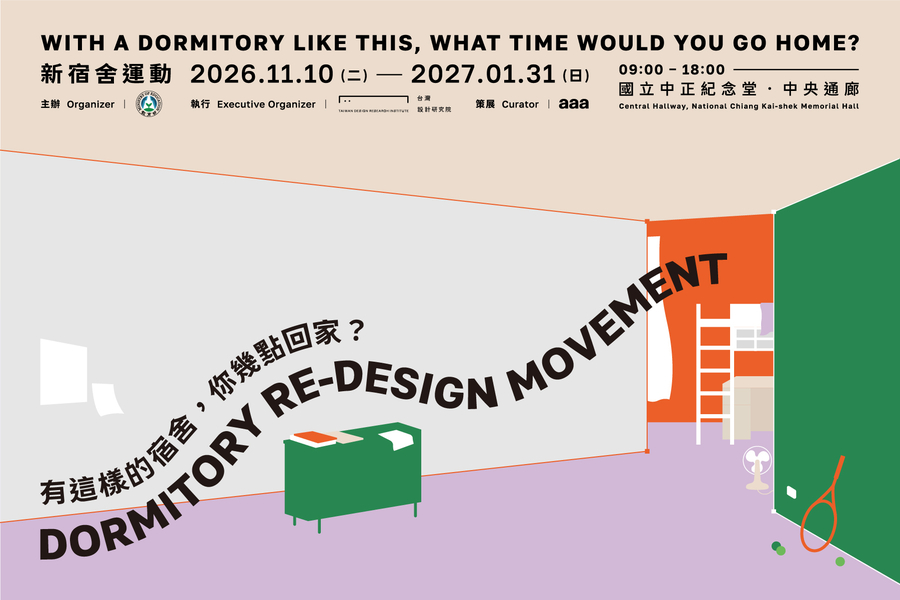
Are a bed, a desk, a wardrobe, and a few roommates enough to mark the beginning of university life?
For many people in Taiwan, a university dormitory is the first place where they learn to live independently after leaving home. In the past, university dormitories were often seen as facilities that simply provided beds. Cramped rooms may foster close friendships among roommates, but university life beyond the bedroom does not take place only in classrooms, nor does it end at the bedroom door. Studying, discussing, making friends, resting, facing pressure, and learning to live with others are all part of university life.
As Taiwan’s higher education system moved from the postwar era through a period of rapid university expansion and into today’s era of declining birth rates, university dormitories were once expected to answer the question: “How can we accommodate more students?” Yet dormitories are also important settings for holistic education. We expect them to be more than functional spaces; they should provide a foundation where students can think, interact, and practice everyday life. Many parts of university life can begin here—from classroom discussions to startup plans; from cooking a bowl of instant noodles for yourself, to several rooms sharing a hot pot, or even a residents’ cooking competition; from watching a film and playing a few games, to stretching, dancing, or practicing yoga in a studio.
Or simply sitting on a bench in a rooftop garden, learning to be alone and to think.
For space to hold more possibilities, we need to leave behind the old idea of the dormitory as “just a place to sleep,” step into real-life situations, and consider the actual needs of management and use. Can that large suitcase brought from home be stored under the bed? Should sneakers, canvas shoes, and slippers go beneath the wardrobe? Could additional bedside outlets, reading lights, and hooks for privacy curtains help roommates maintain different routines and preserve their privacy? Is there another way to deal with clothes that never seem to dry? Are the shared kitchen and communal dining areas really large enough? These seemingly small questions have no single answer that applies to every school. Different students, campuses, sites, and management conditions give rise to different ways of living—and require different spatial responses. Transforming a dormitory is therefore not simply about renovating an old space. It is about repeatedly designing, using, and negotiating the space to find a way of living that fits each community.
Since the Dormitory Re-design Movement began, dozens of schools and numerous design teams have contributed to it. Each school offers its own answer to the question, “How can we live in a dormitory?” The answers differ, yet they all point in the same direction: starting from real needs and rethinking the relationship between dormitories and the people who live in them. This exhibition lays out these answers while leaving room for questions that remain unresolved. Among these different choices and experiments, it asks once again: What kind of university dormitories do we need? Can a dormitory become more than just a dormitory?
Starting from a bed and a desk, we reimagine: when we live together, what else can we become together?
Can a bed, a desk, a wardrobe, and a few roommates be the starting point of university life?
For many people in Taiwan, a university dormitory is the first place they live away from home. Dormitories were once treated as places to sleep. Yet university life happens beyond the classroom and the bedroom. Studying, making friends, resting, coping with pressure, and learning to live with others are part of the experience.
As Taiwan moved from postwar university expansion to today’s declining student population, the question facing dormitories changed. It is no longer simply, “How can we house more students?” As a setting for holistic education, a dormitory should be more than a functional building. It can support learning, exchange, and the practice of everyday life: discussing a class project, developing a startup idea, cooking noodles or sharing a hot pot, watching a film, playing games, dancing, doing yoga—or simply sitting alone in a rooftop garden.
Creating space for these possibilities means moving beyond the idea that a dormitory is “just a place to sleep.” It requires attention to the realities of daily use and management. Can a large suitcase fit under the bed? Where should shoes be stored? Could bedside outlets, reading lights, and privacy curtains help roommates follow different schedules? Where can clothes dry properly? Are the shared kitchen and dining areas large enough?
No single answer works for every university. Students, campuses, sites, budgets, and management systems all shape different ways of living. Dormitory renewal is therefore not simply a matter of renovating old rooms. It is an ongoing process of design, use, and negotiation—one that helps each community discover how it wants to live.
The Dormitory Re-design Movement has brought together dozens of universities and design teams. Each project offers a different answer to the question, “How should we live in a dormitory?” Together, they begin with real needs and rethink the relationship between people and residential space.
This exhibition presents those answers while leaving room for questions that remain unresolved: What kind of university dormitories do we need? Can a dormitory become more than a dormitory?
Starting with a bed and a desk, we reimagine what living together can make possible.
Exhibition Information
Dates: Nov 10, 2026 (Tue) – Jan 31, 2027 (Sun)
Venue: Central Gallery, Chiang Kai-shek Memorial Hall
Opening Hours: 09:00 – 18:00
Note: Open on national holidays; Closure dates are subject to announcements on the CKS Memorial Hall website.
Organizer:Ministry of Education
Executive Organizer:Taiwan Design Research Institute
Curator:office aaa