When AI Meets Packaging Design: Going Deeper and Further Than You Imagine – An Interview with Iris Lee
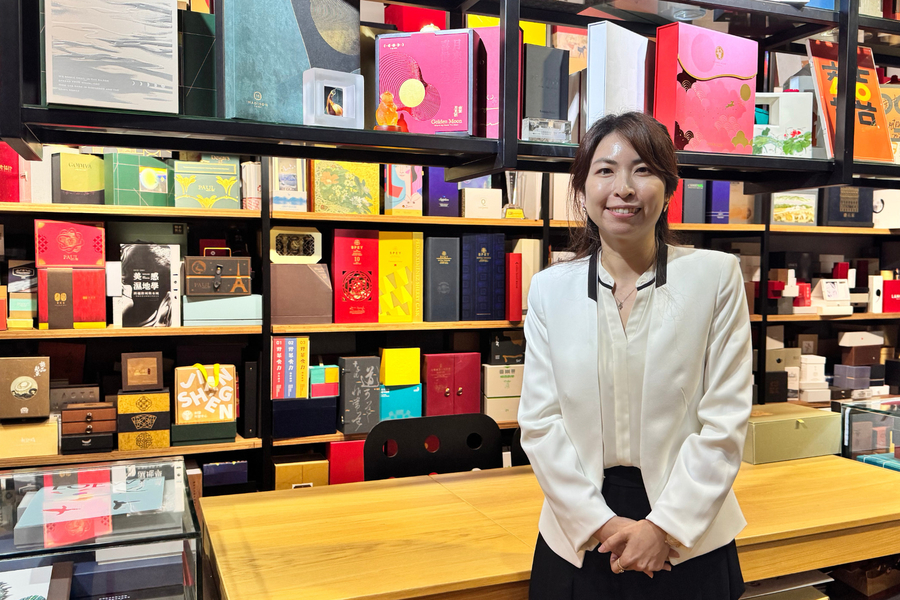
Written by Chairman Iris Lee of TPDA
Edited by Wu Cheng-Yuan, Guo YuSyuan, Tsai Yi-Chieh
Gaining Insights into the Packaging Design Industry from a “30-centimeter Distance”
Consumers’ starting points when choosing products are never exactly the same.
Some prioritize the brand, making brand image the sole purchasing indicator; others chase value for money, with price as the strongest incentive. And for those without brand preconceptions, their choice often comes down to the first impression of packaging design—a perfect demonstration of the power of visual communication.
"The distance between a brand and its consumer is only 30 centimeters!"
Iris Lee, Chairperson of the Taiwan Packaging Design Association, says with a smile. That’s the exact moment when a consumer reaches for a product on the shelf—just 30 centimeters away, yet it’s key to whether the brand will be chosen.
"Consumers who can decide to purchase at first glance already possese brand loyalty," she points out. This is also one of the trickiest challenges brands face when revamping their design. Appearance, color, and even size proportions are memory cues built over years; change them, and loyal consumers may no longer recognize their brand. This is why many classic brands maintain their original look—because familiarity itself is a form of value.
Speaking about the evolution of packaging design, Iris Lee observes: “At first, packaging existed only to protect the product; today, it has long become an extension of a brand’s character.” From functionality—protecting against scratches and bumps—packaging has evolved into a stage that showcases “quality” and “aesthetics.” Yet she emphasizes that aesthetics alone is no longer enough.
"Good design must also respond to the issues of its time."
In recent years, the rise of corporate social responsibility (CSR) and sustainability awareness has required packaging design to convey a brand’s social stance and values. From material choices to visual language, packaging is no longer merely a shell for a product, but the language throug which brands communicate with society.
"Facing that 30-centimeter distance, we need to let consumers feel the warmth of the brand," Lee says with determination.
In every fleeting moment a consumer reaches out, designers and brands have just that short span to win over the consumer’s heart with creativity and insight.
In the early stages of packaging design, the most critical element is not just creativity, but communication.
Chairperson Iris Lee of TPDA emphasizes: “If a designer cannot establish effective communication with the client, even the best ideas cannot be realized.” She summarizes the early-stage planning of packaging design into three core steps:
1. Clarify the “Function”: What problem does the packaging solve?
The primary mission of packaging is to protect the product. From impact resistance, scratch prevention, and shipping compatibility, to opening methods and sequences, all fall within the scope of functionality.
Lee points out: “The protective capability of packaging is the bottomline of design quality.” Only with a solid functional foundation can design truly deliver value.
2. Master “Visuals and Style”: Stand out on the shelf
Good packaging design must capture attention right away.
Color, material, shape, visual language, and even touch and user experience are all part of the design vocabulary. Designers need to balance proportion and rhythm so that the product reflects the unique character of the brand within the overall visual composition.
3. Convey “Brand Value”: Let the packaging speak
Packaging is more than an appearance; it is the first line of brand communication.
Whether conveying corporate social responsibility, sustainability awareness, or a premium image, these elements should be incorporated into the brand strategy from the outset. Lee says: “The essence of packaging is communication and transmission, not merely a beauty contest.” Through design, product concepts can be understood, and brand value can be felt.
In the early design phase, research is a key foundation.
Field observation, focus group discussions, and data analysis in collaboration with market research companies are all essential for understanding real user needs. When executed by professional research firms, the design team typically provides target audience settings—age group, usage scenarios, and consumer behavior—then formulates design strategies based on the analysis results.
However, with the rise of AI tools and large language models, this process is undergoing a revolution. From data collection and user behavior prediction to trend insights, AI is gradually becoming a powerful ally in packaging design decision-making. This also means that future packaging designers will need not only creativity but also “data-driven thinking.”
In the Age of AI, Introducing Technology to Packaging Design
The emergence of AI design tools has led companies to consider reducing research costs while drawing on the rich information provided by language models. However, Lee also points out that the workload for double-checking data sources and accuracy has increased. When using ChatGPT to query market information, Lee and association members often cross-verify the results with other AI tools (such as Perplexity) and web browsers, repeatedly checking sources and reliability. Lee emphasizes that “competitive analysis” is particularly critical: “Packaging design often competes alongside other products on the shelf. To create differentiation, you must understand the design vocabulary of competitors—from color and material to style positioning—all supported by thorough research. Behind this lies a deep understanding of overlapping customer segments.”
AI design tools are even more valuable in the proposal phase. A design proposal typically covers multiple aspects, such as PESTEL analysis, competitive analysis, innovation opportunity plans, personas, and customer journey maps. Lee notes that they are currently experimenting with the “AI Design Strategy Generation Tool” developed by the Taiwan Design Research Institute. With just a few prompts, AI can generate structured content and multiple directions for ideation, greatly reducing proposal preparation time. Yet Lee reiterates that double-chicking data remains crucial at this stage. The issue of AI hallucinations persists, so designers still need to continuously develop their own research expertise.
Beyond the use of AI tools, integrating packaging with digital technologies can also create entirely new effects. Some brand clients have already become adept at using technologies such as traceability QR codes, digital manuals, and QR code videos, which reduce ink usage and visual clutter while providing consumers with more information about the brand’s values. The packaging industry has also begun to combine AR technology to enhance interaction between packaging and customers, transforming packaging from “disposable” afterthought into a tool that offers more pre-purchase decision support and a clearer brand image. Iris Lee also shares that companies often use “anniversaries” as an opportunity to launch special packaging updates, particularly for traditional heritage brands: “If you suddenly change the packaging during regular sales, consumers may not find the product; but releasing limited-edition packaging on a special occasion can actually resonate.” For example, in celebrating the 60th anniversary of Green Oil, the brand released three limited-edition roller bottle designs and combined them with QR codes that played an animated theme song in collaboration with a partner IP, successfully bringing this classic brand back into public attention. “When people had almost forgotten about Green Oil, this design suddenly reminded consumers: ‘This is the scent that has been with me since childhood,’” Lee laughed. “Packaging is more than a visual change—it awakens emotional memories.”
Three Arrows of Packaging Design: Sustainability, Customization, and Modularization
The design industry is currently at a moment of where design, technology, sustainability, and experience are highly interwoven. Packaging is no longer just about making products look attractive, but the frontline for brand strategy, consumer experience, and environmental responsibility. Iris Lee believes that when thinking about packaging, there are three key areas to pay special attention to: sustainability, customization, and modularization.
Regarding “sustainability,” the packaging industry began significant transformation during the pandemic due to reduced demand for physical goods. This includes environmentally friendly materials, recycled packaging, and strengthening packaging structures for logistics. For example, the well-known Taiwanese hair and skincare brand Hair O’right collaborated with FamilyMart to recycle milk bottles from coffee machines into shower product containers, which were then reshelved at FamilyMart, achieving a circular consumption model. Lee also notes that clients have recently requested that “premium gift boxes” be stored flat to optimize warehouse space and save energy, highlighting the new challenge of balancing sustainability with sophistication.
As for “customization,” with AI technologies and digital printing maturing, there is an opportunity to change the production process for small-batch packaging. In the past, producing small quantities was costly, so companies were hesitant to take on minor or low-quantity orders. However, digitalization and AI-assisted rapid prototyping can increase process efficiency, reduce costs, and boost willingness to produce smaller batches.
“Modularization” refers to packaging structure design that uses different modular components which can be assembled in simple ways to meet the needs of various product lines. This approach helps optimize warehouse management and reduces cost pressure in certain areas.
"Good packaging isn’t about how much technology is integrated," Lee says, "but about how many consumer problems it solves and whether it aligns with the brand’s value proposition." As sustainability and carbon-reduction issues gain public attention, companies are increasingly willing to invest more in optimized packaging. After all, it is a key touchpoint for first-line communication with consumers. "The integration of packaging design and technology is not just about creating visually impressive effects. It’s about making packaging smarter, more interactive, and more sustainable in future consumption scenarios."
Advice for Designers
The packaging design industry, like other design fields, faces the challenge of cross-disciplinary collaboration. “Nowadays, all design work requires cross-disciplinary engagement, because you can’t do everything yourself—but you can excel in your own area of expertise,” Lee notes. She believes in the importance of continuing interdisciplinary exchange, because the teams that ultimately succeed are not necessarily those whose designers can do the most, but those who can connect and leverage resources effectively.
In today’s design industry, technical skills alone are no longer the sole competitive advantage. Lee believes that truly outstanding designers need not only professional skills, design thinking, and aesthetic judgment, but also “empathy” and “user insight.” “Young designers today are very strong at gathering information, but the key lies in whether they can transform that data into an emotional brand narrative.” She stresses that design is not merely content output—it is a bridge connecting people and brands emotionally. This process involves creativity as well as the cultivation of professional ethics and coordination skills. In her view, a designer’s role has long moved beyond that of an executor; they are now co-creators of brand value. “When we take on a case, our service does not stop with the project; instead, we aim to build a long-term collaborative relationship.” Therefore, the most valuable qualities a designer can possess are the ability to handle matters with tact, a strong sense of responsibility, and the capacity to accomplish missions through teamwork. Lee also offers advice to newcomers entering the profession: “Sometimes what you want to do and what you can actually do don’t always align.” She suggests gaining practical experience through industry-academia collaborations, internships, and real-world projects before entering the workforce, to understand the limitations and challenges of reality, and learn to find a balance between compromise and persistence. Only in this way can a design truly be “brought to life” as envisioned—carrying both the warmth of ideals and the depth of professionalism.