Design from an Economic Perspective: Exploring Design Thinking Through Economics – An Interview with Jerry Wang
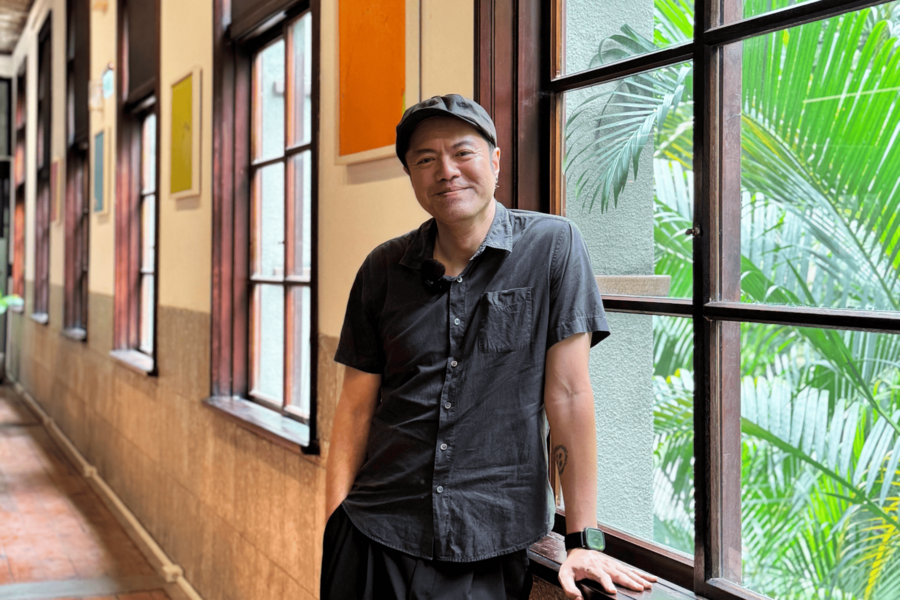
Written by Chairman Jerry Wang of TGDA
Edited by Wu Cheng-Yuan, Guo YuSyuan, Tsai Yi-Chieh
"Before the age of 30, very few of the people around me were designers. Most of my classmates were in sales. So being pragmatic and practical had already become a habit." Jerry Wang, Design Director at U Visual Communication and current Chairman of Taiwan Graphic Design Association, who graduated with a degree in management, speaks of his academic journey with the romance of a designer yet the pragmatism of a businessman. “Design cannot be just about aesthetics,” he says with a smile.
Design from an Economic Perspective: An Alternative Approach to Design Thinking
Before founding U Visual Communication, Wang worked at a design company that frequently collaborated with European design organizations. Unlike discussions that focused solely on “making things prettier,” their conversations centered on business models. Over time, Wang realized that the so-called design thinking and design processes were closely related to what he had studied in business management—marketing, enterprise management, production, sales, human resources, development, and finance. He shares that whenever clients are asked “Why do you want to do design?”, it’s rarely answered with “Because it looks ugly.” He emphasizes that design is often misunderstood as merely “making things beautiful,” when in reality it is a strategic tool for solving problems.
Typically, clients have a functional purpose, either explicit or implicit. For example: a beauty brand might want to use design to create a premium sub-brand; a long-established store may aim to increase revenue; some projects are simply designed to win awards; others seek to maintain profits after the novelty wears off. For public-sector clients, the design mission often leans more toward communicating values and policy objectives. Wang points out that effective visual design can help the public understand the government’s policy direction, thereby increasing trust and facilitating policy implementation. Thus, accurately identifying target audiences and establishing trustworthy communication methods is a crucial element in commercial design.
However, design is not omnipotent. “Design might help you catch someone’s eye or get a click, but the rest still depends on the quality of your product,” he notes. He recalls observing a market redevelopment project where the design style was fresh and pleasant—described as “like a library”—successfully attracting many young vendors during leasing. Yet, operational disagreements among vendors later prevented consensus and smooth management. “This demonstrates that design alone cannot make a product successful,” Wang says. Design is just one part of the process; the management team must work together strategically and develop a model of systematic collaboration to truly leverage the impact of design in brand management.
Designers Need Stronger “Integration Skills”
"As designers, you should expose yourself to quality food, clothing, living, and transportation," Wang emphasizes. He clarifies that this is not an encouragement to pursue materialism; rather, within reasonable limits, it is an effective way to broaden one’s perspective and understand different business models. Having spent a long time serving top-tier clients, Wang developed an open mindset: “Some trends may seem baffling at first glance, but they often reflect the behavior patterns and business logic of a specific consumer segment.” He also encourages his team to engage with business cases across different industries. Beyond taste and aesthetics, he believes designers need “integration skills”—the ability to combine new observations with existing resources, cultivating insight and adaptability through cross-disciplinary understanding.
Wang suggests designers gain experience in three to five types of industries: “Different industries have very different vocabularies, and a designer’s understanding of these vocabularies directly affects their thinking and communication.”For example, in the food industry, he once worked on a project for a publicly listed food company worth around NT$300,000. The accounts had to be broken down multiple times, which initially puzzled him—after all, in a previous finance project, the client paid within the month without evening signing a contract. He later came to understand that in the financial industry, daily transaction volumes often reach eight to ten digits, whereas food products such as grains and cereals are only worth a few dozen dollars. This difference in the scale of amounts naturally shapes very different ways of thinking and working styles. “This is the difference in industry thinking,” he says. Over the past seven to eight years, many designers have focused heavily on cultural projects, but it is just one domain, and Wang encourages them to expand their horizons across different perspectives, gaining a deep understanding of the logic and vocabulary of various industries. When facing clients from different fields, designers must possess cross-disciplinary adaptability: “You can’t have every client only talk about design thinking,” he jokes.
He shares a personal experience: “Working in the city versus small towns requires very different communication styles.”Once, during a cultural project shoot, he needed to interview an artisan designated as a “national treasure.” Upon arriving at the master’s home, an elderly man came out, smoking, accompanied by two bodyguards. The man immediately asked, “Young man, what do you want?” Wang thought to himself: “If I start talking about design thinking right now, I’d probably be shown the door immediately!”
“Trend Sensitivity”: A Designer’s Core Competitiveness
While constantly engaging with new things, designers must also maintain a keen sensitivity to “trends.” In the design industry, trends are a “non-negotiable topic” that can rapidly influence business models. Take Apple’s Supplier Code of Conduct as an example: to implement a sustainable supply chain strategy, Apple has clear penalties for suppliers who fail to meet the standards. Verified violations result in the suspension of new projects and collaborations, and for continued or serious violations, Apple terminates all cooperation. Amidst this trend of sustainability, designers must rethink design direction and material use. Sustainability is no longer just an added bonus; it has become a basic prerequisite for business collaboration.
Technological advancement also drives changes in business models. Wang recalls that twenty years ago, gathering design references often meant going to Eslite Dunnan bookstore, flipping through books, taking notes, and buying one book at a time. With the proliferation of online information and rapid AI development, the way people gain access to information has fundamentally changed. He notes: “Nowadays, people go to bookstores mostly for leisure, not purely for knowledge gathering.” The closure of Eslite Dunnan is an example of the old business model giving way to new consumption patterns. The rise of smartphones is another example of design trends intersecting with business transformation. When the iPhone was first released in the 3G era, smartphones were primarily eye-catching “electronic toys” with limited functionality. But with the advent of 4G and 5G, phones can transmit images, handle payments, stream videos, and more—completely changing how products and services are delivered. Wang emphasizes: “You must understand the core applications of technology to consider its potential business impact.”
“Design often goes beyond aesthetics; it may involve environmental tidiness, traffic flow planning, or shelf arrangement—fundamental user functions.” Early grocery stores survived when 7-11 first emerged, but over time, they gradually lost market share as convience stores quickly evolved. Human nature actively seeks “new,” “convenient,” and “clean” spaces, as well as more “refined” lifestyle. Over the past 40 years, convenience stores have evolved from simple retail to multi-functional service hubs, offering bill payments, personal shopper service, delivery pickup, dining, and entertainment—all responses to faster-paced lifestyles, higher population density, and limited service labor. By observing these societal shifts, designers can identify pain points and transform them into design solutions, thereby maximizing the value and irreplaceable competitiveness of design.
AI and the Next Generation of Designers
On the current trend of artificial intelligence, Wang offers an analogy: “Think about it, when I was thirty, did I need to learn how to use a digital phone? I picked it up naturally.” When a tool becomes fully pervasive, spanning industries, society, and the environment, resistance only risks being left behind by the times. While short-term differences may not be obvious, over time the time cost gap between someone using new tools and someone not using them will widen.
From the perspective of running a company, Wang notes that digital tools are now easily accessible. With the same amount of time and budget, designers today can accomplish more complex tasks than a decade ago using these tools. Modern graphic design is no longer limited to drawing and layout; it often involves strategic planning, digital design, brand packaging, and sometimes even video editing and 3D animation production. He points out that in the past, industries were clearly divided into distinct categories, but now a graphic designer is expected not only to understand printing, but also have basic web or front-end knowledge, and sometimes marketing and planning skills. Wang advises design students to take cross-disciplinary courses, such as joint programs between management and design departments, which can broaden perspectives and spark creative thinking. He also encourages using AI tools to explore industry information and market landscapes, including revenue, consumer demographics, regional distribution, and supply chain structures. Approaching design from an economic perspective not only aligns it more closely with client needs, but also enhances design value and professionalism.
Wang shares that within his company, AI is gradually being used for background generation or to produce partial components that are then processed and assembled into the final work during post-production. “But our core remains designer hand-drawing,” he emphasizes. The focus should not be on AI itself, but rather on how to achieve a goal using the tools available. He believes: “Ultimately, design always comes back to the designer. Only by continuously enhancing integration skills and cultivating a sharp ‘sense’ of trends can designers master their tools, remain irreplaceable, and continue to play a pivotal role in maintaining design quality.”