Taipei Main Station B3 Gets a Makeover: Curved Service Boxes Improve Flow and Clarity
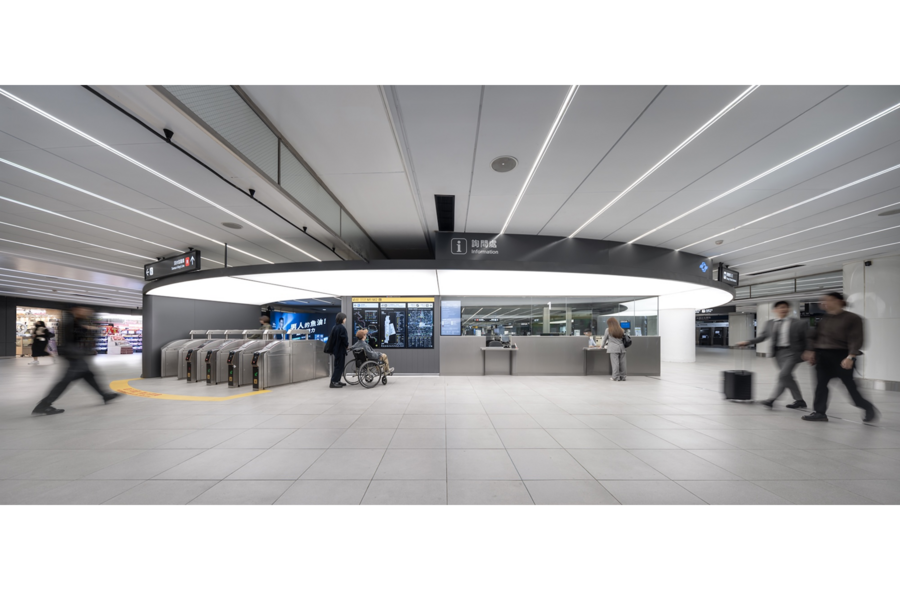
To enhance service quality and create a more user-friendly commuting environment, the Taiwan Design Research Institute (TDRI) and the Taipei Rapid Transit Corporation (TRTC) have once again joined forces to renovate the B3 level of "Taipei Main Station"—the hub with the highest passenger volume and density in Taiwan. Inheriting the core philosophy of the "Zhongshan Station Redesign"—organizing metro services into integrated “service boxes”—this project utilizes systematic "Service Boxes" to integrate essential station functions and leverages signage to divert passenger flow, thereby optimizing the station’s overall service efficiency.
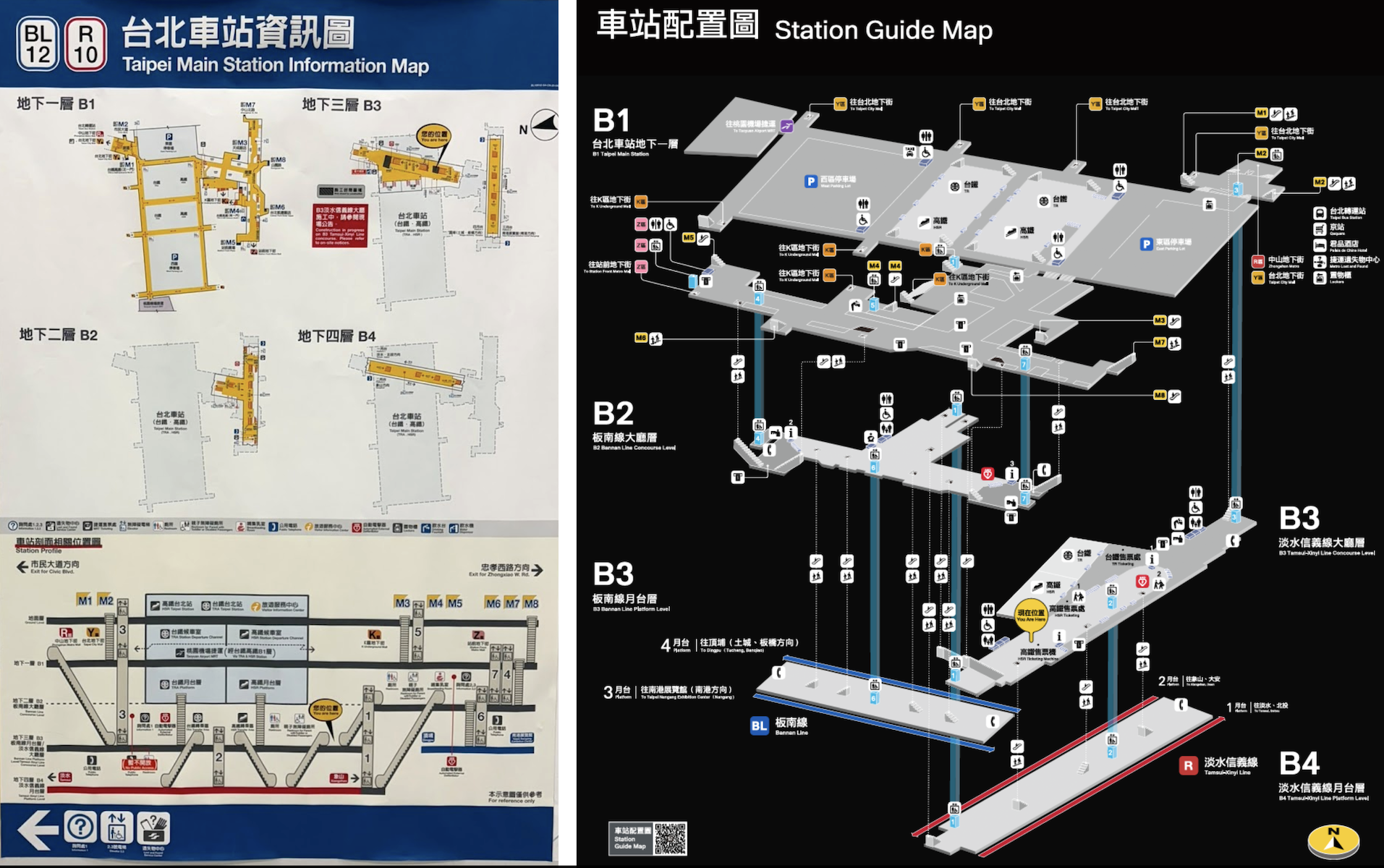
As the flagship station of Taipei Metro, Taipei Main Station has been in operation for over 30 years. With the ever-growing demand for services, the station has gradually faced challenges in system integration: the aging infrastructure appeared dim and outdated; inquiry counters lacked space, requiring ad-hoc additions; and storage was insufficient while commercial stalls were scattered, leading to fragmented service functions. Furthermore, constrained by the site’s original structure, the station is filled with dense and massive columns. Particularly in the triple-rail transfer area, the space is cramped yet carries the highest passenger density in the country; travelers often lose their way due to the visual obstruction of these columns. During the research phase, both station masters and passengers noted that "travelers often don't know where they are. " Despite Taipei Metro being the primary entity on the B3 level, its legibility has declined amidst diversifying services and crowding. Improving the service experience and expediting passenger diversion through the configuration of signage, spatial functions, and facilities has become the most critical mission of this project.
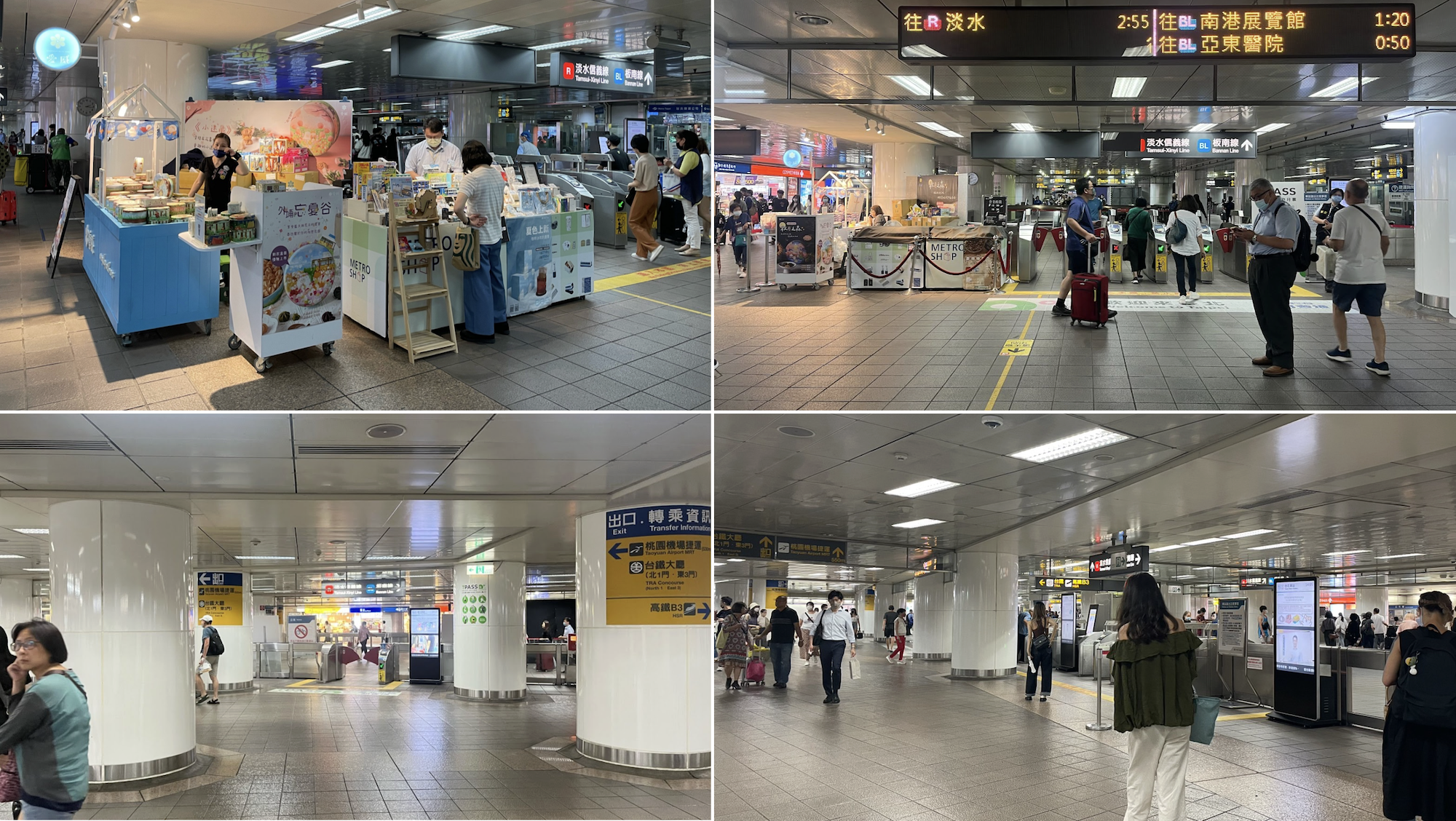 ▲ (Before) The triple-rail transfer area is densely packed with columns; travelers exiting the gates often have their line of sight blocked, leading to disorientation.
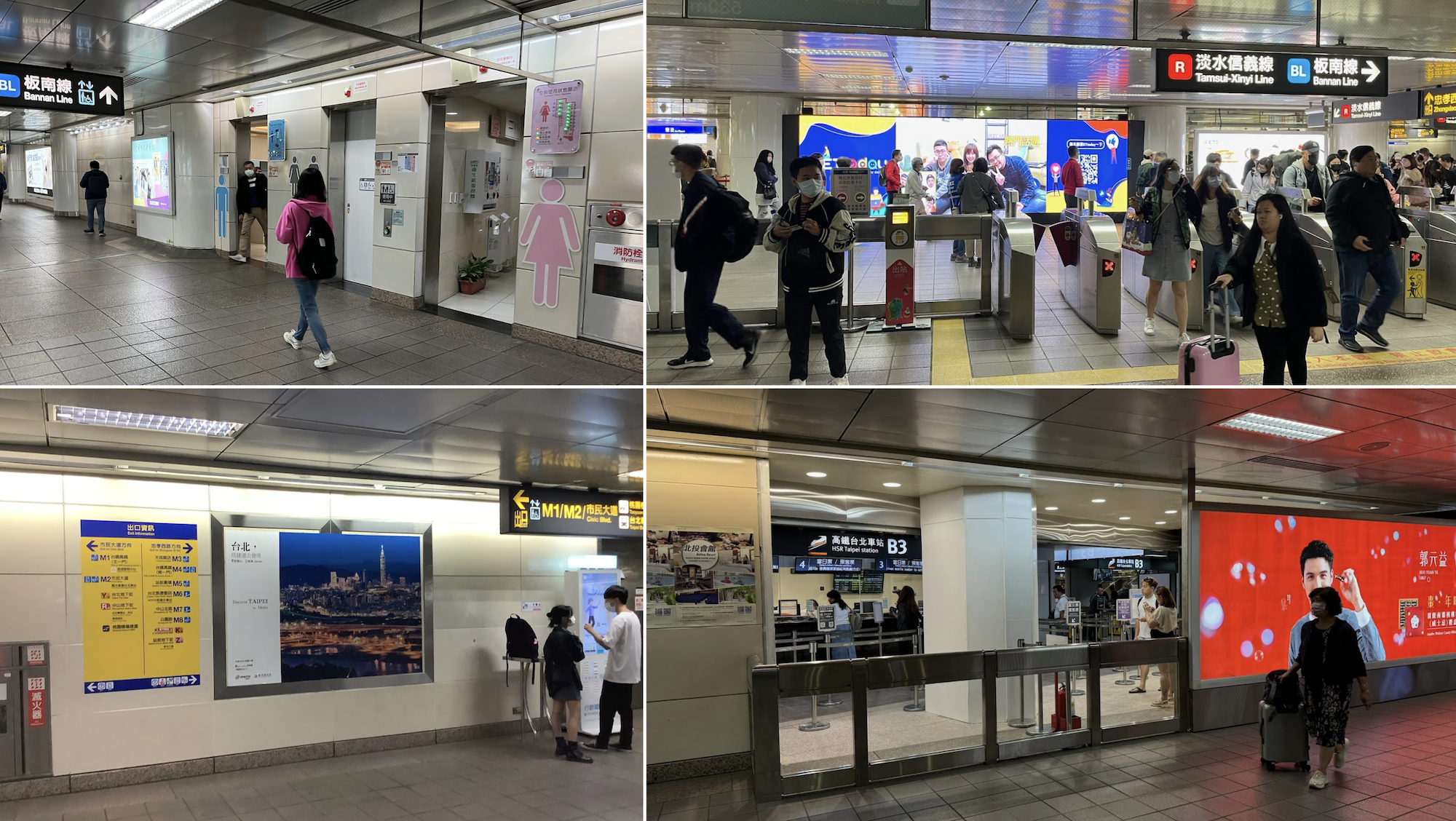
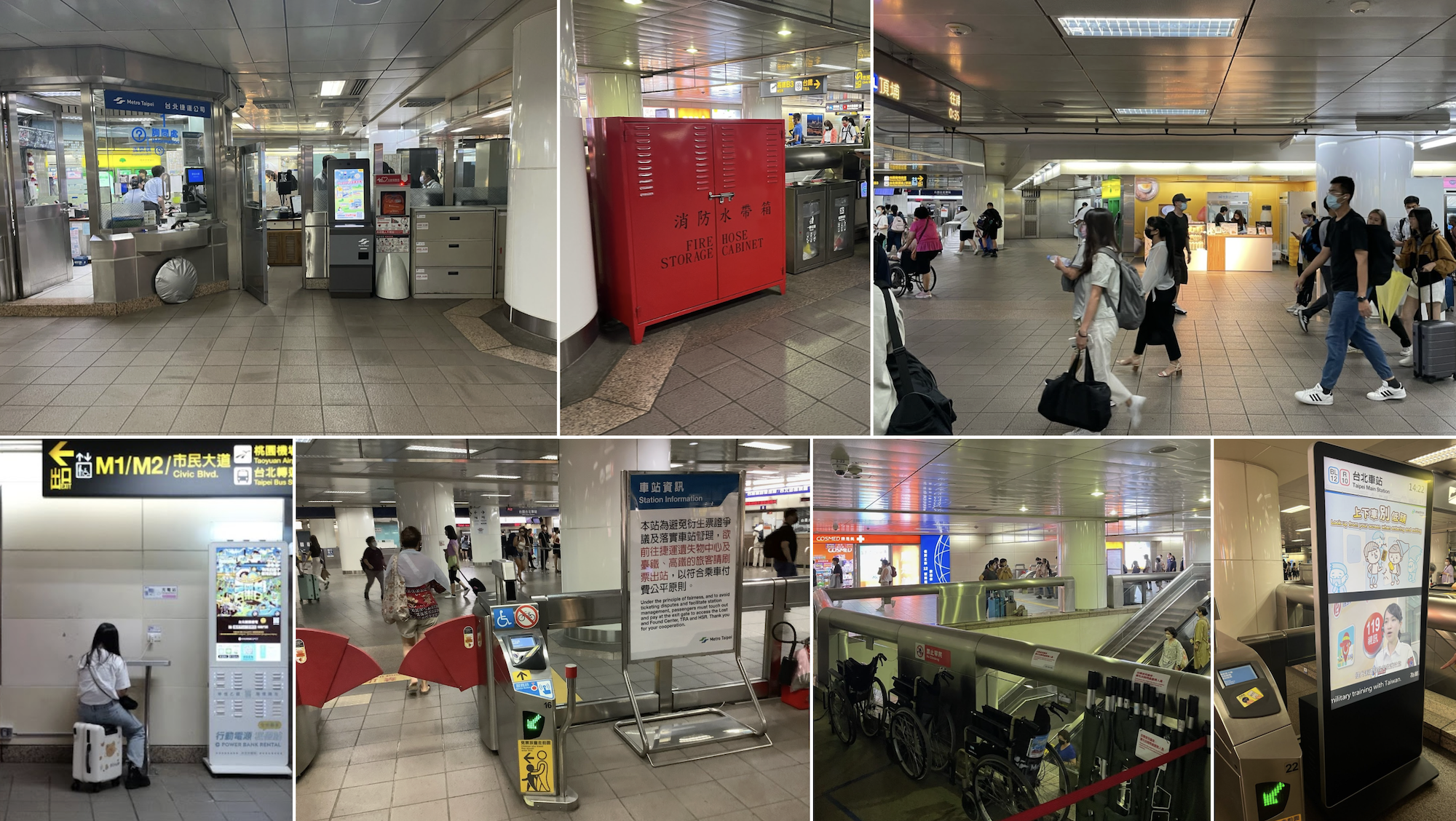 ▲ (Before) Insufficient service and storage space, combined with scattered commercial stalls, led to fragmented service functions.
Where there’s light, there’s service! Curved Service Boxes illuminate Taipei Metro
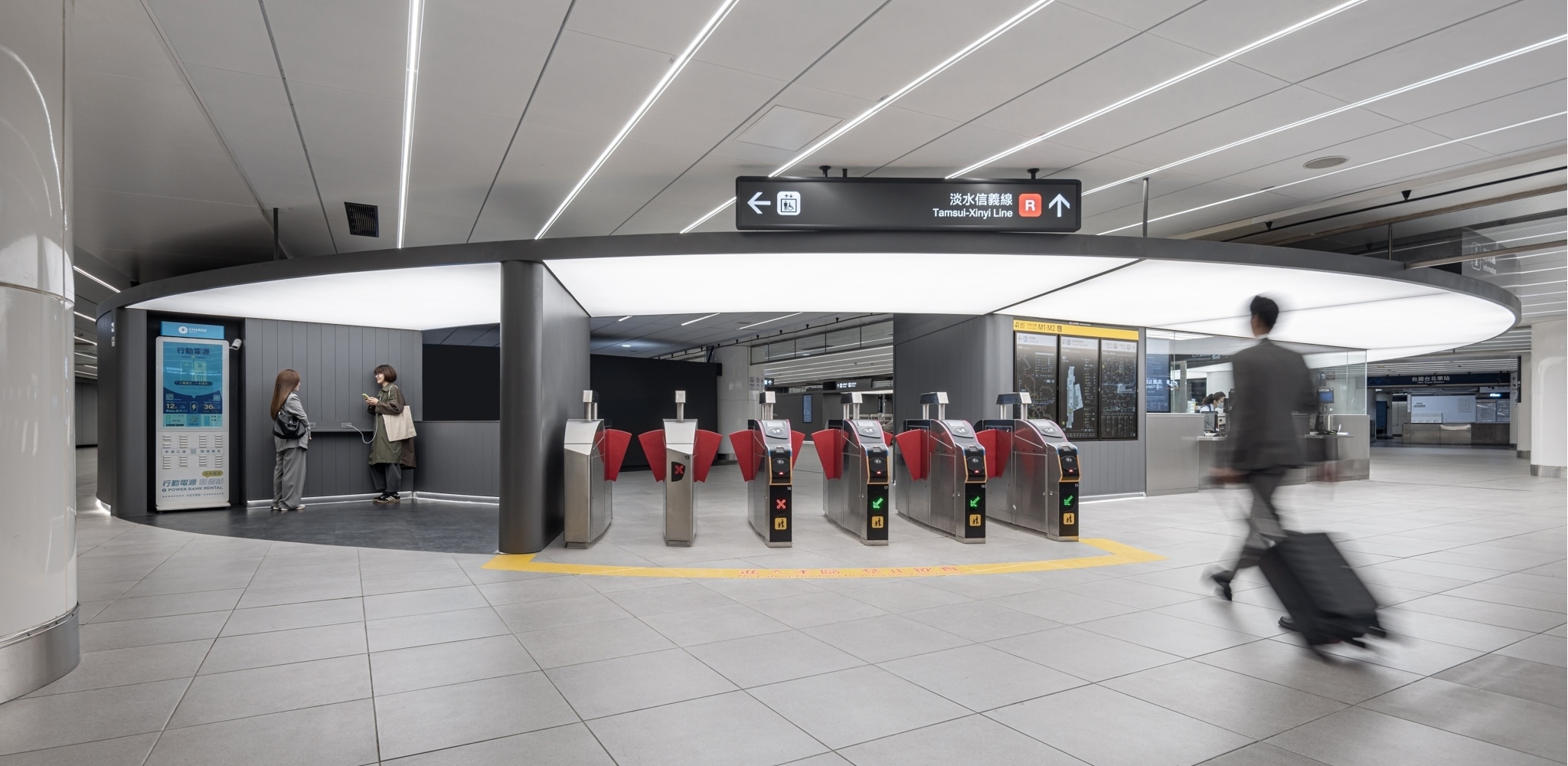
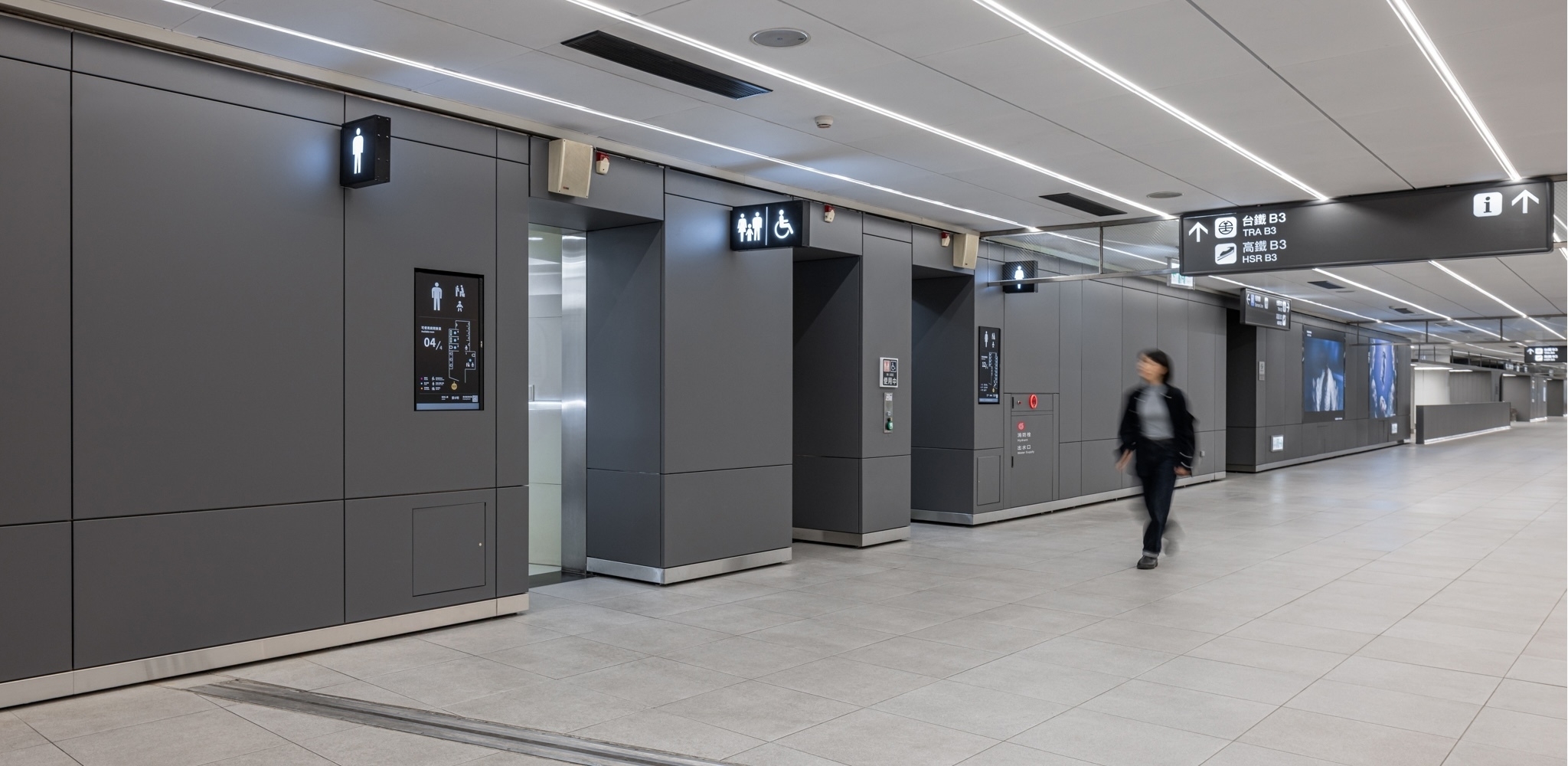
Unlike the Zhongshan Station project, the "Service Box" module was further evolved and expanded for the Taipei Main Station design. Facing site constraints, the team ingeniously used curved service boxes to wrap around existing columns. This approach reorganizes service interfaces and softens the station’s many corners and edges. This makes spatial circulation more fluid while releasing more floor area to effectively alleviate crowd movement. Additionally, the design utilizes the depth of the service boxes to create multi-functional spaces, including storage rooms, commercial counters, meeting points, charging stations, trash cans, and digital signage screens, allowing limited space to demonstrate higher utility through integration and order.
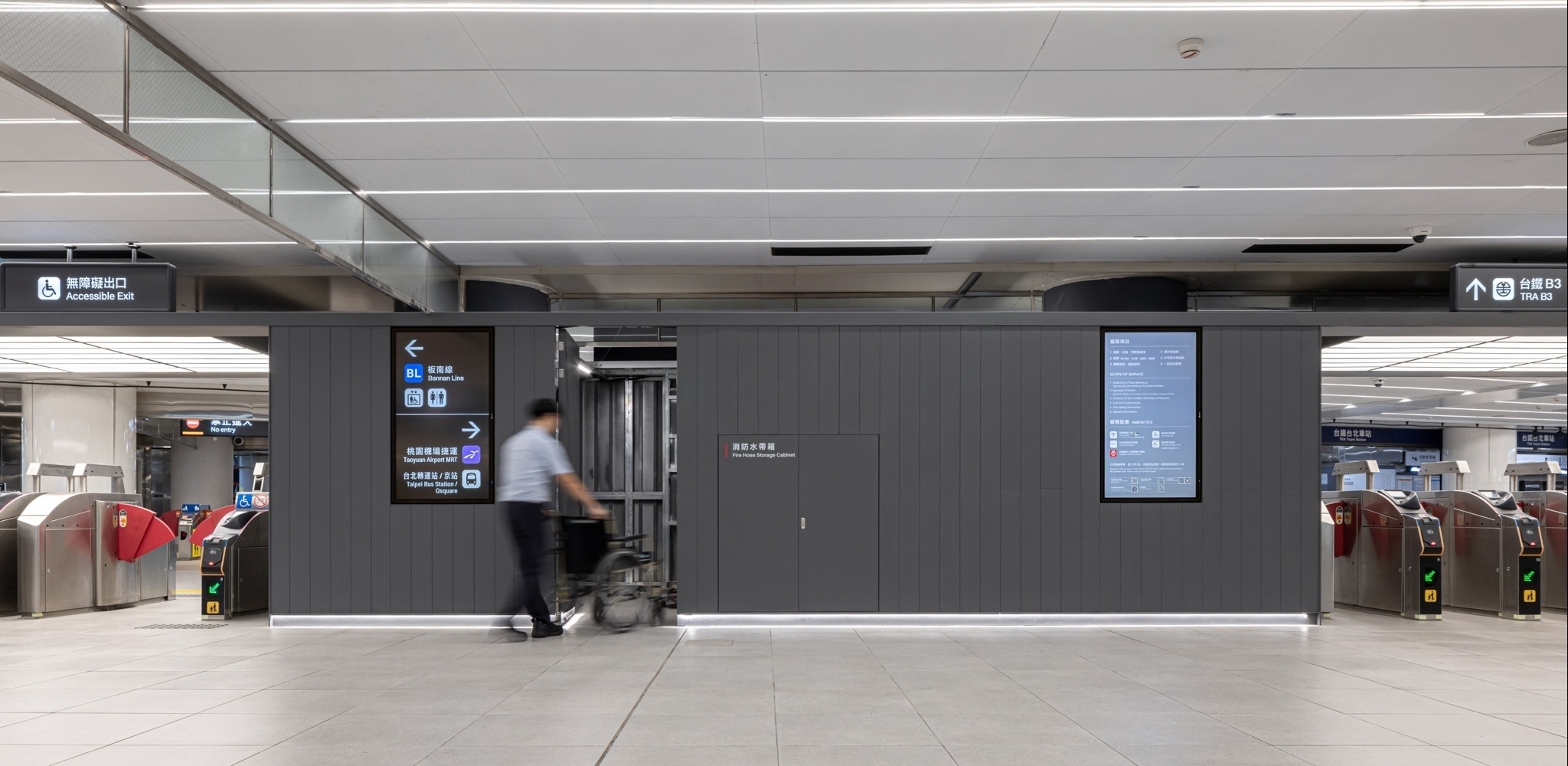
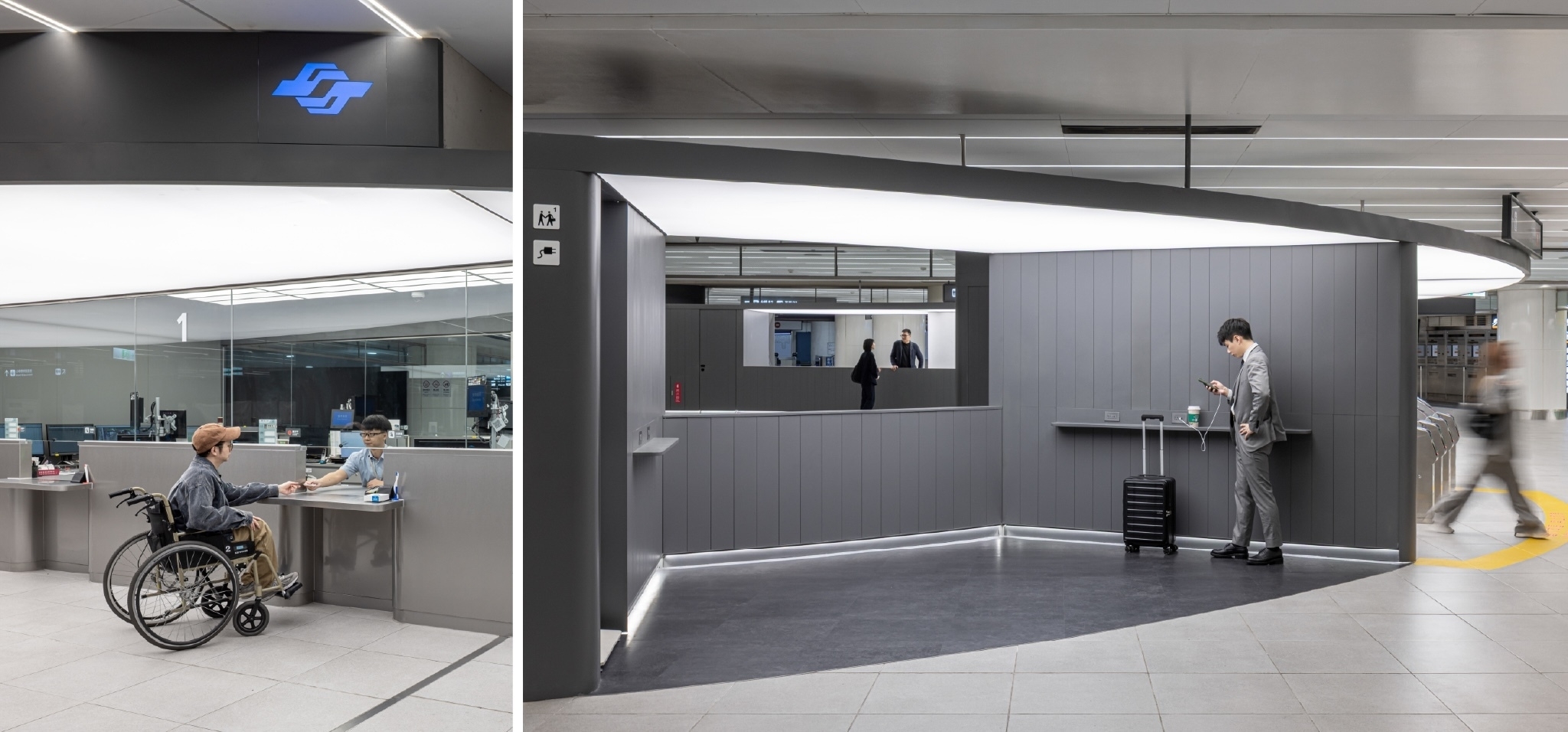
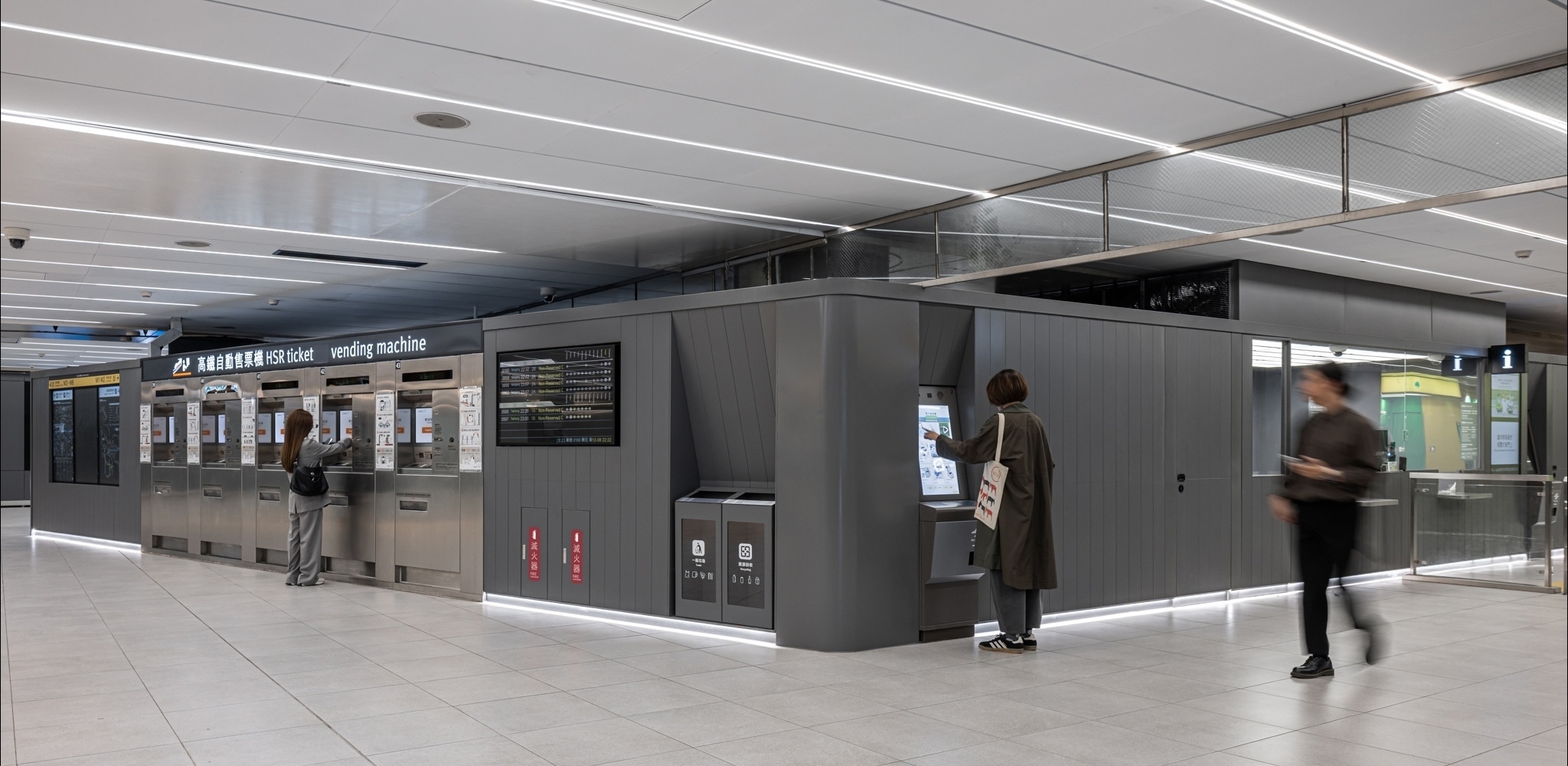
- Enhancing Legibility through Glowing Curved Service Boxes
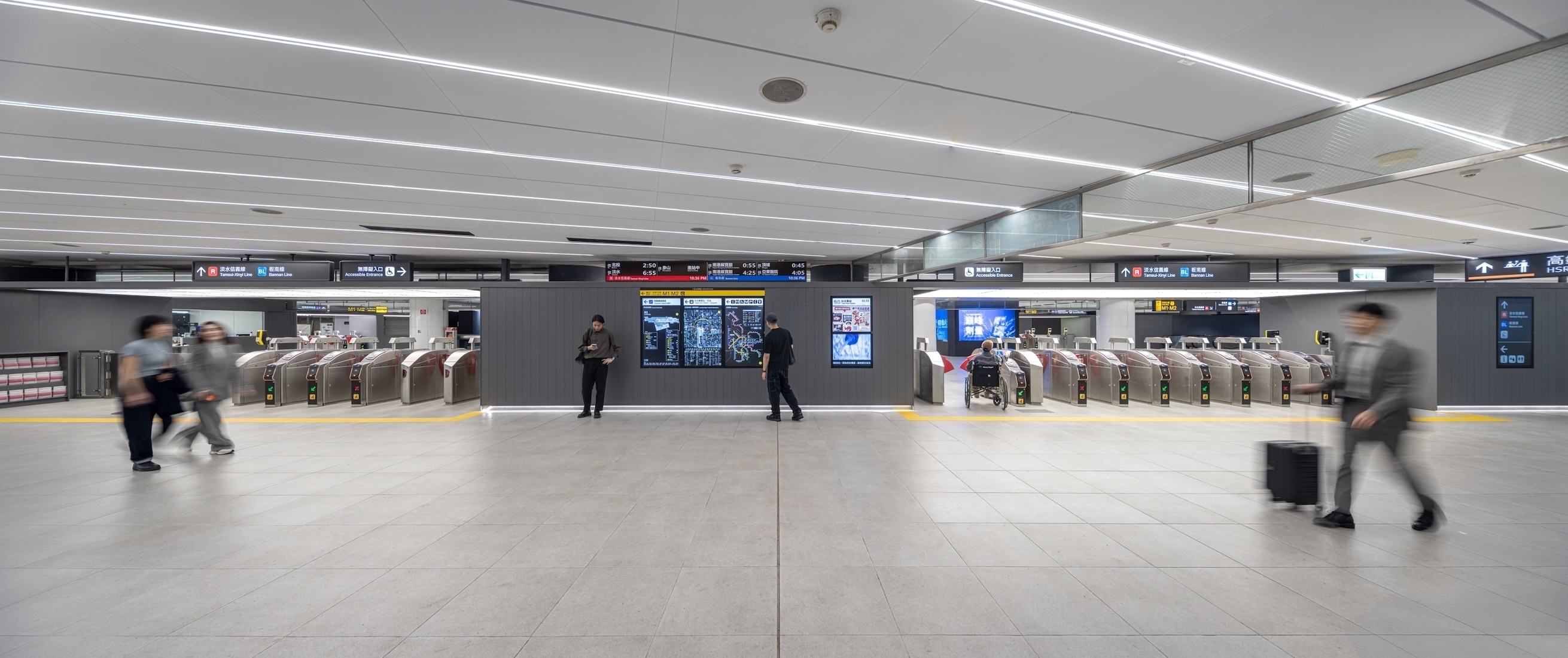
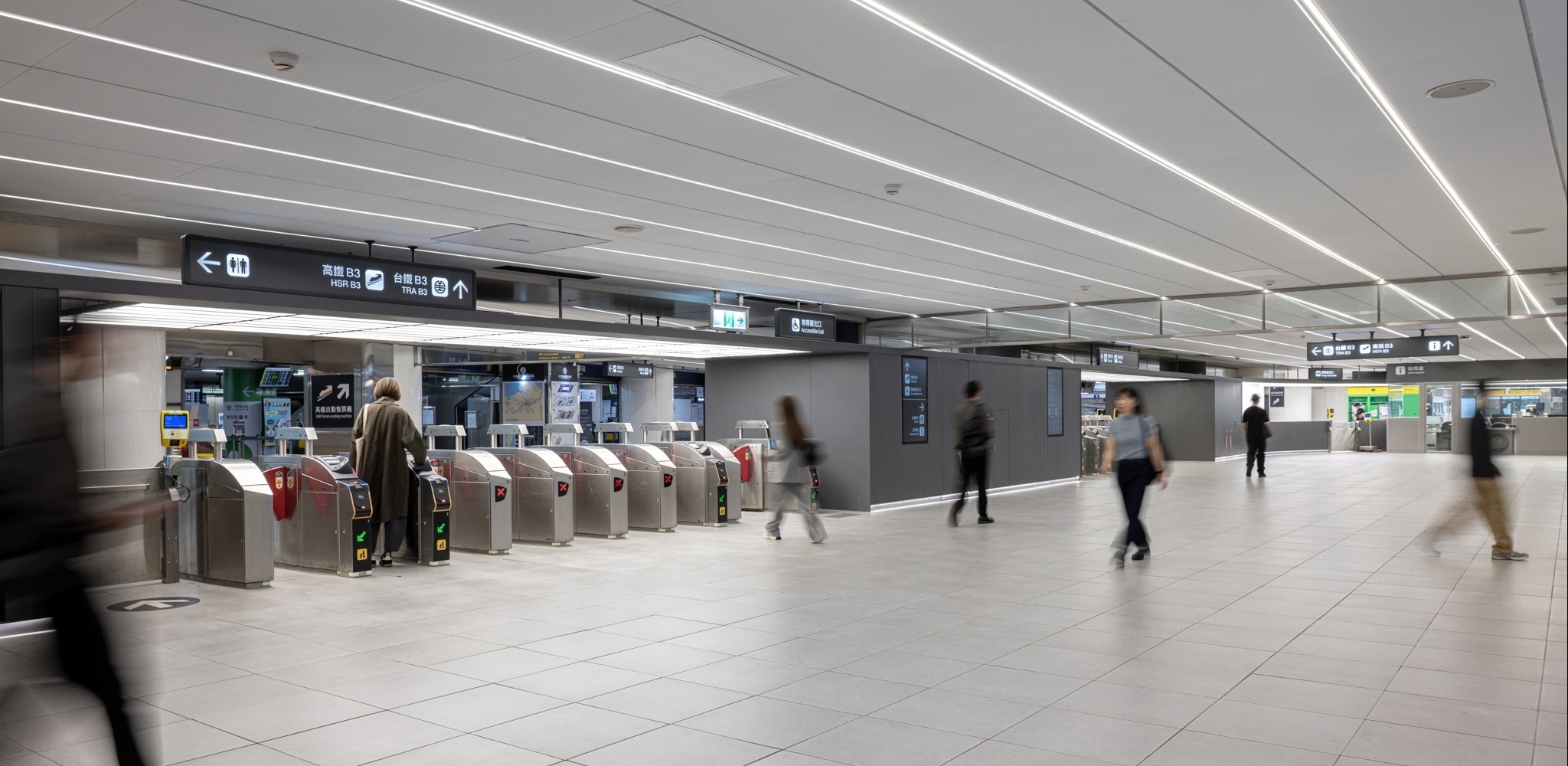
The design team skillfully tucked service functions into glowing curved boxes, making service interfaces more recognizable and enhancing the overall legibility—making it easier for passengers to understand where they are and where to go—and the friendliness of the Taipei Metro environment.
- Optimizing Circulation to Speed up Passenger Flow
The gates in the western transfer area were reconfigured for entry and exit to improve transit efficiency. In the eastern corridor, the gates were moved back by 40 meters, integrating surrounding retail into a cohesive commercial belt for smoother circulation and a more complete experience.
-
A Warm Experience Crafted through Light and Materials
The overall lighting utilizes warm color temperatures to replace cold, clinical lights. Along the corridors, continuous linear light strips create a subtle guiding effect, intuitively leading passengers forward. The flooring has been updated to large-format tiles to minimize the noise generated by rolling luggage, fostering a quieter and more comfortable transit environment.
The Vital Role of Signage in High-Traffic Areas
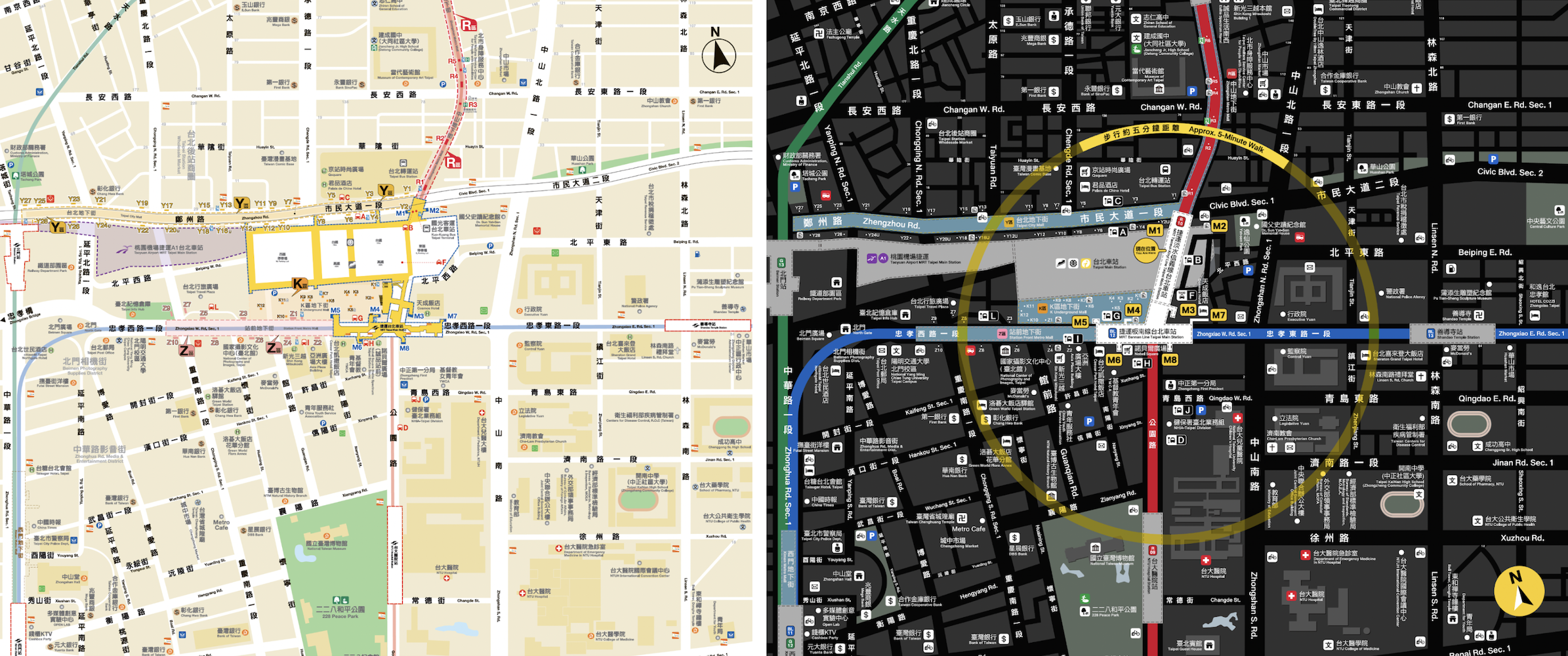
As the B3 level handles the highest passenger volume in the metro system, quickly and effectively diverting travelers is the core task of the signage system. According to gate flow data, the traffic on the transfer side (west) is double that of the east side. Therefore, this design uses clear signage to guide non-transfer passengers toward adjacent gates to distribute the crowd and alleviate congestion.
Furthermore, the team specially adjusted the direction and placement of arrows so passengers can identify their route most intuitively. The signage system also aligns with the latest 2023 Signage Guidelines issued by Taipei Metro, introducing a more systematic approach and adopting Universal Design fonts to further improve readability and usability. This not only provides a comprehensive systematic upgrade for clearer guidance but also introduces Universal Design (UD) fonts to enhance readability and usability further.
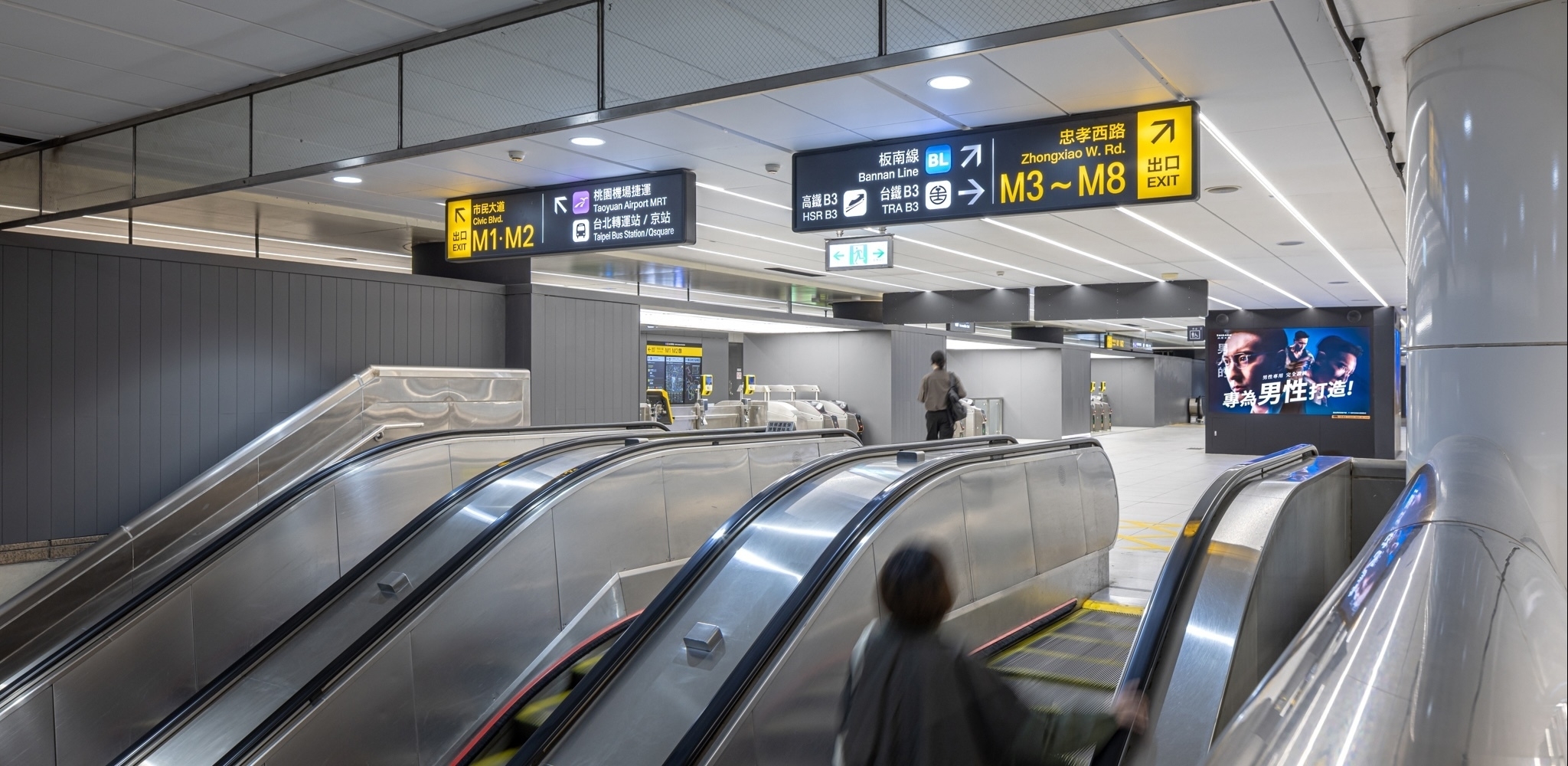
From Chaos to Order: Shaping a More Comfortable and Convenient Commuting Environment
Moving beyond partial improvements, this renovation encompasses a complete rethinking of spatial layout, signage guidance, and commercial redistribution, along with a total overhaul of ceilings, lighting, flooring, and walls. The result sheds the old image of the Tamsui-Xinyi Line B3 level as dim and confusing, creating a clear, orderly, and modern environment. As the most iconic metro system in Taiwan, this move is poised to create a positive ripple effect. The Taiwan Design Research Institute will continue to focus on public services in transportation hubs and observe passenger behavior to shape even more comfortable and convenient commuting environments for all users.
Organizer: Taipei Rapid Transit Corporation (TRTC)
Execution: Taiwan Design Research Institute (TDRI)
Cross-Disciplinary Consultants: Shi-Chang Lin, Malone Chang, Hui-Yen Liao, Kanji Kato
Spatial Design: Morpho Design Wayfinding
Design: Path & Landforms
Design-Build Contractor: UPGA / WARCH
Photography: Yuchen Chao Photography
Video Production: EdiTrio Studio